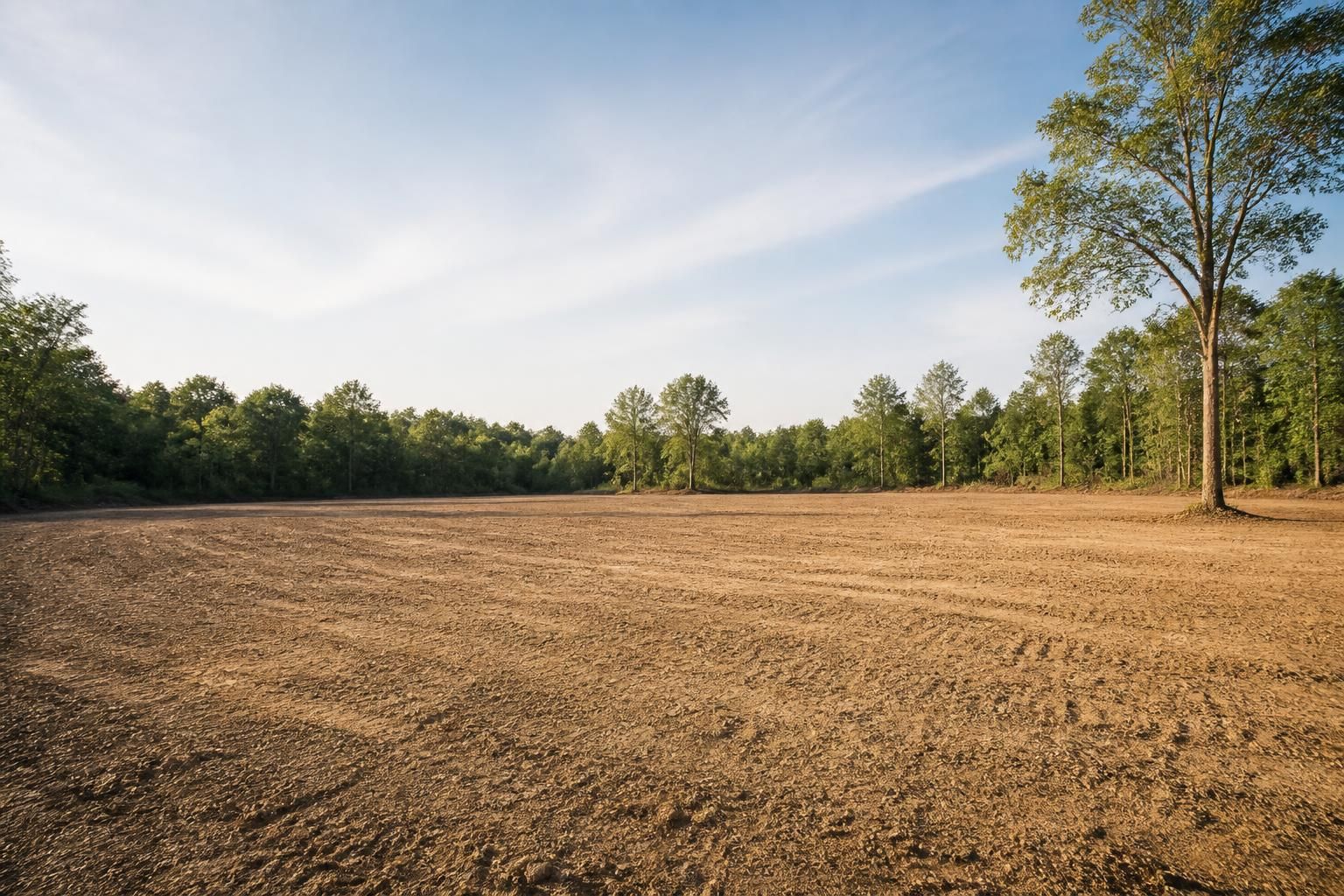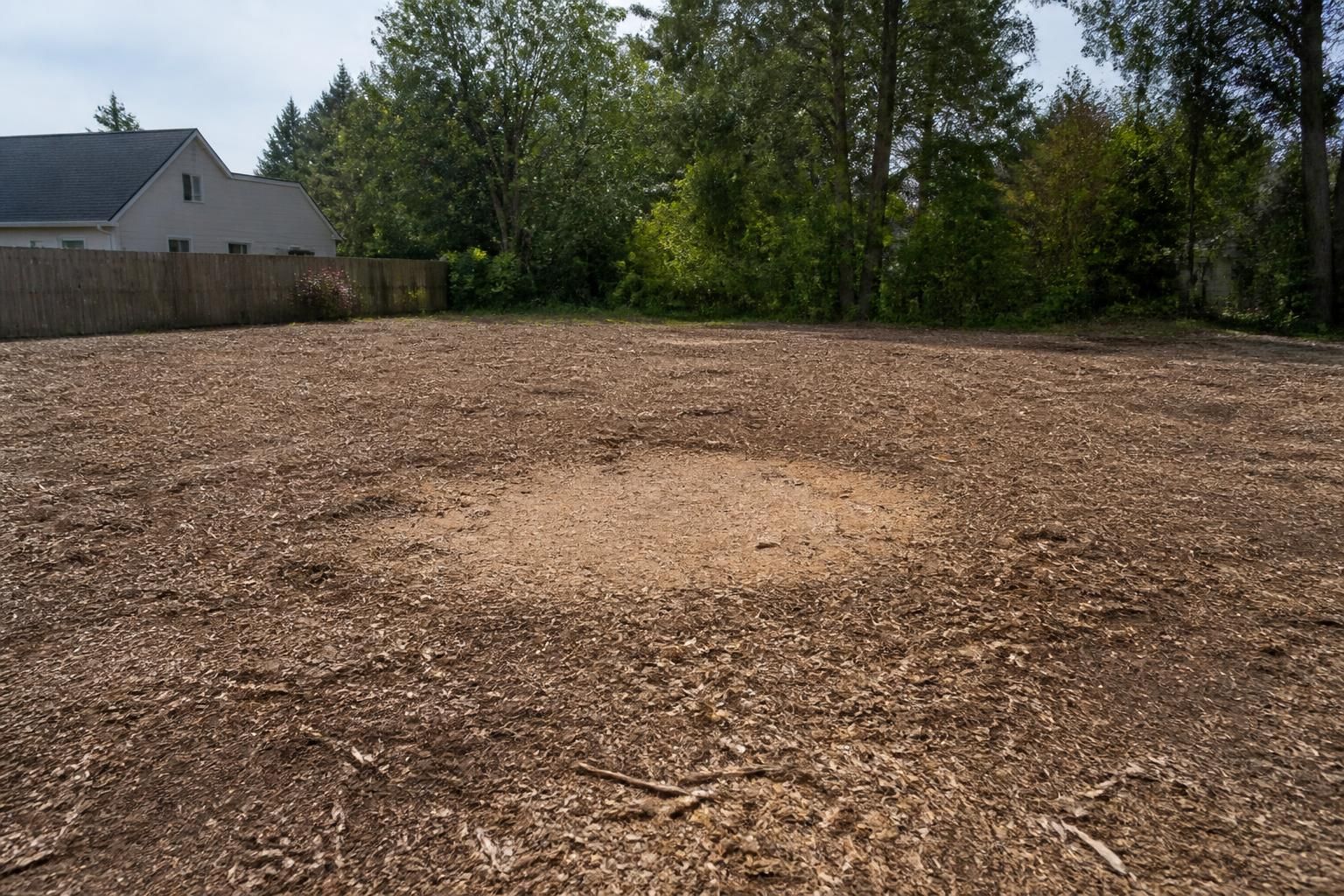
Stump grinding cuts the stump down below ground level, leaving much of its root system underground. Complete stump extraction removes the stump and more of the root mass, usually with greater digging and ground disturbance. Because contractors sometimes use “stump removal” to mean grinding, ask exactly what method, depth, root work, and cleanup an estimate includes before you agree.
Stump grinding vs. stump extraction at a glance
| Question | Stump grinding | Stump extraction |
|---|---|---|
| Method | Grinds the stump wood below the surrounding ground surface. | Digs, cuts, pulls, or uses equipment to lift out the stump and more of its root mass. |
| Remaining roots | Most roots remain underground and decay over time. | More of the root mass is removed, but small or distant roots may still remain. |
| Ground disturbance | Disturbs soil around the stump and leaves a grind area. | Usually disturbs a larger area because soil and roots must be excavated or moved. |
| Cleanup | Creates wood chips mixed with soil; hauling and finish work should be clarified. | Can leave a larger hole and soil or root debris to handle. |
| Common use | Reducing a stump that interferes with mowing, access, or ordinary yard plans. | Discussed when the stump and substantial roots must be removed for a particular site plan. |
These are general distinctions. Actual methods and results depend on the tree, stump, access, equipment, and site conditions. “Extraction” does not necessarily mean every root is removed.
When may stump grinding be suitable?
Grinding may fit when the main problem is the raised stump: it catches a mower, creates an obstacle, or occupies space you want to landscape. It lowers the visible wood while generally avoiding the broader excavation associated with pulling or digging out a root mass. If you plan to seed grass or make a garden bed, tell the contractor so the requested finish and chip handling can be discussed.
Talk with a qualified contractor about extraction or other options if the project requires removal of a substantial root mass, a deeper excavation, or preparation for a structure or hardscape. A ground stump is not automatically a construction-ready base, and grinding does not guarantee that every root or piece of wood is gone. For structural work, have the builder or design professional specify the site preparation they require.
Do species and the site affect regrowth?
They can. A stump from a tree that was still alive when cut may produce new shoots, and some species can also send up shoots from roots beyond the stump. University of Illinois Extension and University of Minnesota Extension describe these species-dependent differences in stump and root sprouting. Grinding lowers the stump, but homeowners should not treat it as a guarantee against all regrowth. If new shoots appear, identify the tree if possible and ask an arborist or qualified contractor about suitable next steps.
Ground conditions and nearby features matter too. A stump beside a fence, foundation, walkway, planting, irrigation line, or other buried feature can limit how the work is approached. Tell the contractor what is nearby and what you plan to do with the area.
What affects the estimate?
There is no reliable one-price answer without details about the job. Factors that may affect an estimate include:
- Stump size, including the visible base and root flare.
- How many stumps there are and how far apart they are.
- Access for equipment, including gates, slopes, and tight turns.
- Roots, nearby obstacles, and the condition of the work area.
- The requested grinding depth and intended use of the space.
- Whether chips are left, gathered, hauled away, or included in other cleanup.
Depth and cleanup are especially important to discuss because a quote using “removal” may not mean excavation. T&A’s stump-grinding service page explains the company’s grinding service and the factors it discusses for a job-specific estimate.
What happens to the wood chips?
Grinding produces a mixture of wood chips and soil. Ask whether that material will remain in place, be gathered, or be hauled away, and whether cleanup is included in the quoted scope. Also ask who will provide and place backfill or topsoil, and whether leveling or seeding is included. Do not assume grinding alone leaves a finished lawn.
If you want grass, discuss the amount of grind debris and the soil needed to establish the surface. Illinois Extension advises removing stump chips and filling with quality topsoil when preparing turfgrass over a former stump site; the exact approach depends on the job and local conditions. For a new tree or other planting, ask the landscaper about placement and remaining roots rather than assuming the old stump spot is ready.
Questions to ask before accepting an estimate
- Does “stump removal” here mean grinding, excavation, or another method?
- What stump size, number of stumps, and grinding depth are included?
- Will roots beyond the stump be addressed? If so, which roots and how?
- What happens to the chips, and is hauling included?
- Are backfill, topsoil, leveling, and seeding included or separate?
- What access, underground lines, or nearby obstacles should I identify?
- What will the site look like when the agreed work is complete?
Stump grinding in Commerce, Georgia
T&A Stump Grinding LLC provides stump grinding in Commerce and lists nearby communities including Jefferson and Maysville among its service areas. Availability and the work that fits a particular property should be confirmed for its location and access. Visit the Commerce service-area page for local information.
Stump grinding questions homeowners ask
Does stump grinding remove all the roots?
No. Grinding reduces the stump below ground level, but most of the root system remains underground. Roots may decay over time, and some may extend well beyond the grind area.
Can a tree grow back after stump grinding?
It can, depending on the tree species and whether living tissue or roots remain. Some trees sprout from stumps or lateral roots, so grinding should not be treated as a guarantee against regrowth.
Can I plant grass after stump grinding?
Often the area needs debris removal, suitable topsoil, and surface preparation first. Ask what the grinding cleanup includes and whether your plan to seed grass is part of the estimate.
What determines stump grinding cost?
Common factors include stump size and number, equipment access, roots and nearby obstacles, requested depth, and cleanup or hauling. Ask for a job-specific estimate that spells out the method and included work.
What information should I send for an estimate?
Share the property location, number of stumps, approximate size, access details, nearby obstacles or known underground lines, and what you want done with chips and the finished area. Photos can help explain the site.
Discuss your stump project
Have a stump you want removed in Commerce or a nearby community? Call or text T&A Stump Grinding at 706-870-4375 to discuss your project. You can also use the estimate and contact form.